
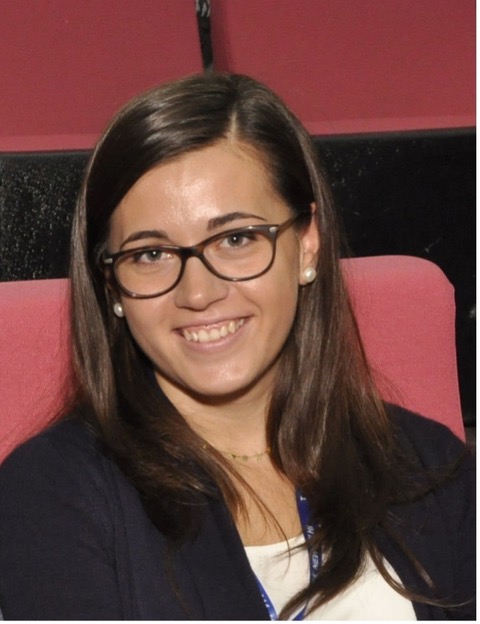
Alessandra Menafoglio is an Associate Professor of Statistics at the Department of Mathematics of Politecnico di Milano.
We asked her to tell us about her journey, her work, and her interests.
Alessandra, how did your interest in mathematics begin?
I have always liked the idea of understanding how things work at a deep level. At school I was drawn to scientific subjects, but with mathematics I discovered a language capable of describing reality in a rigorous and surprising way. I was fascinated by the fact that even very abstract structures could have concrete applications, and this pushed me to explore the field further.
You studied here at Politecnico di Milano. What do you remember about those years?
They were very intense and formative years. I studied Mathematical Engineering, a program that combines theory and applications, and I found an extremely stimulating environment. Here I learned not only technical contents, but also a method for approaching complex problems with curiosity and rigor, thanks in part to meeting Professor Piercesare Secchi, who guided me in my first steps in research, passing on enthusiasm, methodology, and the value of scientific dialogue.
During my PhD I had the opportunity to spend research periods abroad and engage with different scientific communities, while at the same time starting collaborations with Italian research groups. It was an experience that broadened my perspective and allowed me to see research as an open dialogue among different scientific communities.
At the same time, I have always felt a strong connection with Milan, the city where I grew up and studied. I chose to build my academic career here, while continuing to collaborate with researchers and institutions from other countries. Throughout my journey I was very determined to keep Milan as a point of reference, and I also consider myself fortunate to have grown in such a stimulating environment as Politecnico di Milano, where the quality of research and openness to international collaboration encourage the development of new ideas and projects.
What is the focus of your research today?
I work on statistics for complex data, particularly spatial and functional data. Many natural and environmental phenomena cannot be described by a single number, but rather by more articulated structures such as curves, spatial fields, or images.
An important part of my work concerns phenomena related to natural hazards. Due to its geographical and geological characteristics, Italy is naturally exposed to earthquakes, landslides, and floods. In this context, statistics can help improve our understanding of these phenomena, quantify uncertainty, and support more informed decisions in land and risk management.
At the same time, the growing availability of data and the development of new technologies are opening up new possibilities for analysis and modeling. Tools developed within statistics, data science, and artificial intelligence are becoming increasingly important also in the study and management of natural hazards.
What role does teaching play for you?
A fundamental one. Teaching means passing on not only technical tools, but also a way of thinking. I try to help students understand that statistics is a powerful tool for interpreting the complexity of the world.
At the same time, I also feel a strong sense of giving back: Politecnico gave me so much in my own education, and being able to contribute to the growth of new generations of students and researchers is for me an important way of giving back.
Being a woman in STEM: what has your experience been like?
I believe it is important to make diverse paths in scientific disciplines increasingly visible. STEM fields need different perspectives and talents.
Today there are many opportunities and positive role models, and I think it is important to convey to young female students the idea that a scientific career is not only possible, but also highly stimulating.
Is it possible to balance an academic career and personal life?
I believe so. It requires balance and organization, but academia can also offer a certain degree of flexibility. Rather than seeing these two dimensions as being in conflict, I prefer to think of them as parts of a journey that grows over time.
Looking to the future, what do you hope for?
To continue doing research with enthusiasm and to contribute to the education of new generations. In a society increasingly driven by data, statistics can help transform information into knowledge and knowledge into more informed decisions.
Innovative scientific fields such as artificial intelligence and data science are evolving very rapidly and offer extremely exciting perspectives. In these contexts as well, statistics has a great deal to contribute: it provides fundamental tools for interpreting data, quantifying uncertainty, and developing reliable models.
It is a perspective that makes this field of research particularly dynamic and full of opportunities.